
Derisk spatial assays with AtlasVerify.
A high-throughput in-situ bulk qualification assay on an adjacent section helps predict spatial assay performance before you commit your slides.
Mount 5–10 µm sections on standard 1" × 3" slides (typically ~5 slides per sample), then ship to AtlasXomics.
We run an in-situ bulk qualification assay, generate an NGS library trace, and perform shallow sequencing (30–50M reads).
Review in-situ bulk peak signals (e.g., TSS enrichment, FRiP) to predict spatial performance on adjacent sections.
Why it matters: Spatial assays are expensive — sample qualification helps reduce failure risk from suboptimal blocks and increases confidence before scaling to full spatial profiling.
In-situ bulk qualification assays derisk your spatial studies.
Learn how a simple qualification workflow can flag challenging FFPE blocks early, guide ROI selection, and help you move forward with confidence.
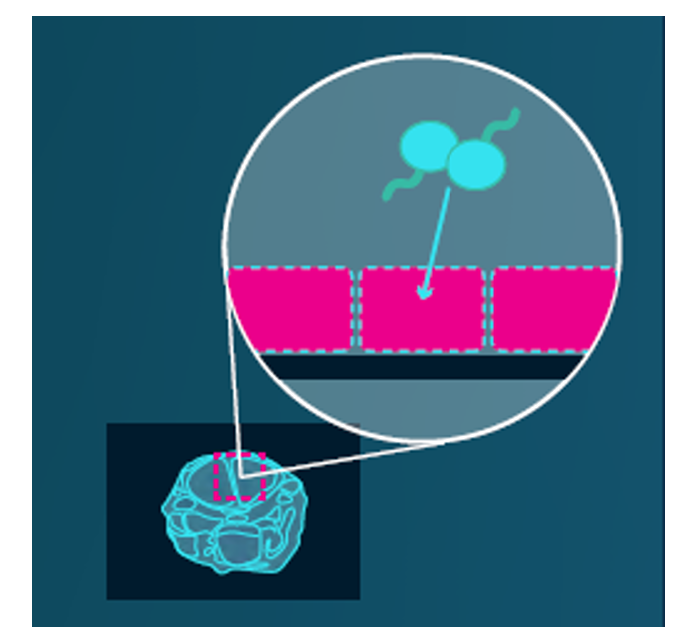
A practical guide to using AtlasVerify to evaluate tissue quality before spatial profiling — covering protocol, key QC metrics, and case examples across FFPE and fresh-frozen tissue types.
- Will this tissue work for spatial ATAC?
- Is permeabilization optimal for this block?
- Is chromatin quality sufficient in this section?
- Where is the best ROI for spatial profiling?
Ready to qualify your samples?
Ship us slides from your tissue blocks and we'll run AtlasVerify to predict spatial assay performance before you commit to a full run.