
Turn intact tissue into a high-resolution spatial epigenomic map.
Profile chromatin accessibility, histone modifications, RNA, and DNA methylation directly on tissue — without dissociation or specialized instrumentation.
Two names, one platform: DBiT-seq is the published spatial barcoding method, and FlowGel is how AtlasXomics packages that same core chemistry for your lab.
The spatial barcoding methodology behind the platform — mapping molecules to their location in intact tissue. It's the approach established and cited across peer-reviewed publications.
Published methodThe AtlasXomics pre-assembled consumable built on that same core chemistry — delivering the barcoding without the traditional microfluidic setup, so the workflow runs on standard lab equipment.
AtlasXomics productFrom tissue to spatial data
Five steps take an intact section to a pixel-level epigenomic map — mount, label in situ, encode spatial position, lyse and recover, then sequence and reconstruct.

How X × Y barcoding works
Two orthogonal barcode patterns flow across the tissue. Their intersections label every molecule with a unique X,Y coordinate (e.g., X2Y3) that survives into sequencing and is used to place each read back in its original location.

One spatial barcoding platform. Multiple biological readouts.
FlowGel simplifies spatial barcoding

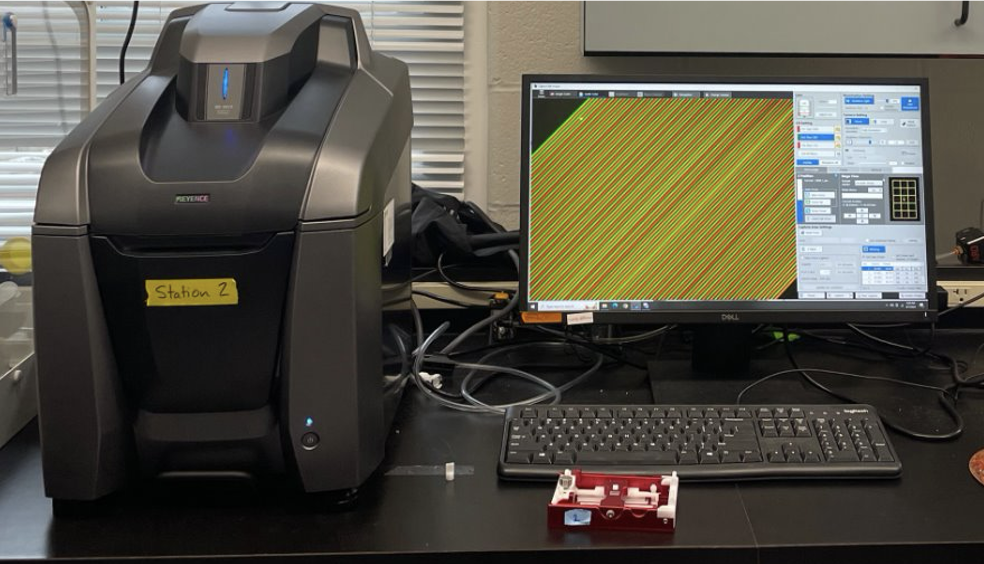
What you need
Run FlowGel with standard slides, a fluorescence microscope, routine molecular biology equipment, and NGS access — we supply the barcoding consumables, reagents, protocols, and analysis support.
Choose how you want to work
Send us tissue for full white-glove service, or run spatial epigenomics in your own lab with FlowGel kits, protocols, and support.
Proven and published
DBiT-seq and FlowGel are described in peer-reviewed publications across leading journals.